How Many Dudes?: The Definitive Deep-Dive Review and Cultural Phenomenon of the Ultimate Dude-Builder Roguelike
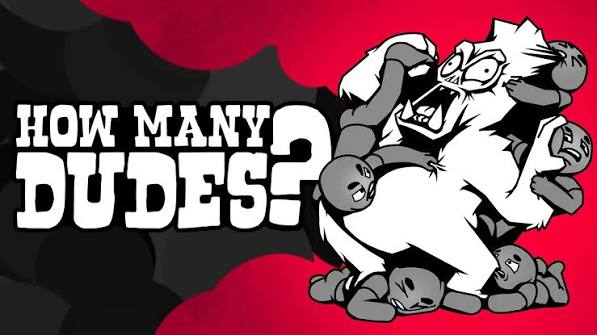
How Many Dudes? is an addictive indie roguelike autobattler developed by Butterscotch Shenanigans that transforms the internet’s favorite absurd hypothetical debates—like whether a thousand toddlers or a single horse-sized duck can take down a gorilla—into a chaotic, deeply strategic army-management masterpiece.
Introduction: The Birth of the Meme and the Game
The phrase "How Many Dudes?" didn't start in a vacuum. For years, internet forums and late-night voice chats echoed with variants of the classic thought experiment: How many average guys would it take to defeat a grizzly bear? Can a swarm of toddlers overwhelm a professional fighter? Capitalizing brilliantly on this cultural fixation, developer Butterscotch Shenanigans turned idle curiosity into a polished, high-velocity gameplay loop.
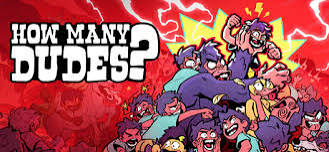
Rather than relying on a slow narrative rollout, the game plunges players straight into the "Dude Ranch," a sandbox realm where strategic resource management meets absolute logistical absurdity. You do not control individual combatants in real-time; instead, you curate, multiply, and buff an escalating roster of specialized units. As the game officially launches following an explosive demo phase, it demands a thorough examination of its mechanics, appeal, flaws, and overall cultural footprint.
Chronological Evolution: From Pre-Alpha Sparks to 2026 Release
The Viral Pre-Alpha and Steam Demo Phase (Late 2025–Early 2026)
The project began as an explicit "hook-first" experiment. When the early pre-alpha and demo versions hit itch.io and Steam in late 2025, the response was astronomical.
- Community Traction: Streamers picked up the chaotic runs within weeks, driving the concurrent user count past 3,000 and securing over 100,000 wishlists in a single month.
- Iterative Patching: Developers actively engaged with community feedback via Reddit and Discord, balancing bizarre units like Spartans, Vikings, and Warlocks while ironing out early balance anomalies.
The Official Launch and Beyond (Mid-2026)
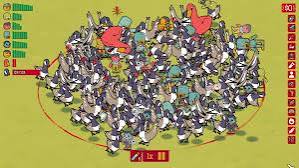
With its official release, the game expanded far beyond the scope of its initial sandbox vertical slice.
- Content Scaling: The transition from demo to full release introduced dozens of new relics, enemy tiers, and bizarre boss encounters that push numerical scaling into the hundreds of levels.
- Cross-Platform Maturity: Performance optimization ensured that late-game chaos runs operate smoothly across both desktop setups and mobile platforms.
Core Gameplay Mechanics: Building Your Dude Army
At its heart, How Many Dudes? operates as a stat-driven, passive tactical autobattler with deep roguelike synergy mechanics. You manage a roster categorized by specific archetypes, positioning them to maximize passive traits, active item relics, and list-order multipliers.
- The Roster (42 Unique Dudes): Players recruit diverse units ranging from standard regular guys and tanky knights to specialized damage-dealers like vikings and utility units like wizards.
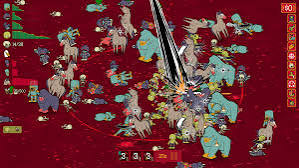
- The Opposition: Waves escalate from duck-sized horses and standard toddlers to apex predators, mythical beasts, and full-scale cosmic entities.
- Relic Synergies: Relics modify stats, stacking infinitely in rare cases (such as the Dory relic) or modifying specific front-line groups, creating a strategic depth comparable to heavyweight card-battlers like Balatro.
Rating and Verdict
Evaluation CategoryScore (Out of 10)Gameplay & Mechanics8.5 / 10Humor & Theme9.5 / 10Replay Value8.8 / 10Interface & Clarity7.2 / 10Overall Expert Rating8.6 / 10
Final Verdict: How Many Dudes? successfully transcends its meme-inspired origins to deliver a genuinely compelling roguelike dudebuilder. While minor interface clutter and passive downtime keep it from absolute perfection, its brilliant synergy systems and unmatched comedic charm make it an essential pickup for strategy fans.
Conclusion
In summary, How Many Dudes? proves that a strong, humorous core concept backed by tight, iterative game design can conquer the indie scene. It bridges the gap between internet absurdity and legitimate tactical depth, offering a satisfying progression curve that keeps players returning for "just one more run" against a horse-sized duck.